Monday, April 18, 2011

newspaper preservation


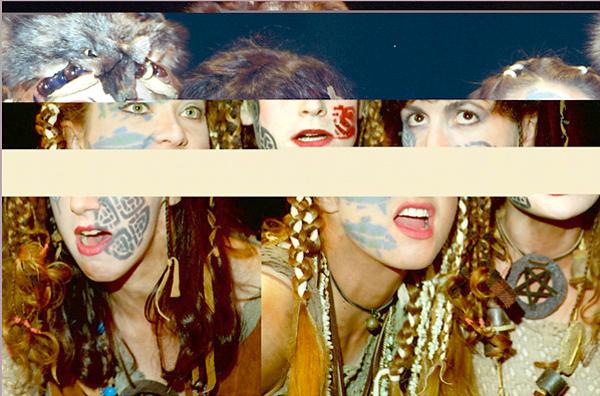
[Participant and presenter, Vicky McCargar, used the above corrupted photo as an example of corrupted data during the Newspaper Archive Summit at the Reynolds Journalism Institute at the University of Missouri, Columbia ¦ LOS ANGELES TIMES FILE PHOTO]


Events of last week drove home just how tenuous newspaper preservation in the digital age really is.

There was the Newspaper Archive Summit in Columbia, Missouri. The talks centered on digital content and orphaned titles, how to preserve them, the costs, the risks, and most importantly, what's at stake if we don't. As documented in this piece from the Missourian by conference attendant, Tom Warhover, preserving digital content is a constant battle with sometimes tragic results.

Then, came the UK Libraries' Digital Library Services' presentation to the Kentucky Press Association Board of Directors. UK unveiled their latest tool for contemporary newspapers preservation called Paper Vault (Beta). Paper Vault allows for seamless upload of whole issues of print-ready PDFs. The files are then prepped for UK Libraries Trusted Digital Repository and for online access. Publishers from the larger conglomerate newspapers quickly dismissed the repository, citing contractual agreements with vendors who offer the goods behind a pay-wall. However, the smaller newspapers were equally enthusiastic about the opportunity.

Enlightening bookends to a digital week.

Thursday, March 17, 2011

Making the Transition


So many newspapers are folding under the weight of digital media that it's hard to stay positive some days, that is if you're in the business of newspapers or preserving the first record of history, such is the case with KY-NDNP. But here comes a glimmer of hope from our friends at The Rural Blog who reports on the success of Connecticut's Register Citizen and California's Appeal-Democrat.

For more inspiration, try 10 Newspapers that Do It Right from Editor & Publisher.

Kudos to everyone working hard to keep our history alive.

Monday, December 20, 2010

This day in History

From our favorite historian, Mary Koegel, comes this exquisite niblet:


Today in KY newspaper history, in 1837, it's the birthday of everybody's favorite (alleged) atheist, Charles Chilton Moore, editor & founder of Bluegrass Blade. Ironically, he was the grandson of Barton W. Stone (co-founder of Disciples of Christ, Christian Church, & Church of Christ).

Read more about Charles Chilton Moore at the Kentuckiana Digital Library, or if you'd like something longer, John Sparks recently released Kentucky's Most Hated Man chronicling Moore's exploits.

Monday, July 19, 2010

R.I.P. David Dick

(Photo by: Ron Garrison)

Kentuckian and journalist extraordinaire, David Dick, died July 16, 2010 at his home in Bourbon County, KY. he was 80. Though he was born in Cincinnati, Dick's mother moved the family to her native Kentucky home when David was only 18 months old. the rest, as they say, is history.

David Dick was a writer and journalist best known for his long-running writing and reporting with CBS News as well as his many bestselling books such as Rivers of Kentucky (2001).

Funeral services were July 19 in Paris, Kentucky.

Dick's oldest son, Sam, has followed in his father's footsteps as anchor of the local Lexington CBS affiliate WKYT, 27 Newsfirst.

A fitting tribute about David Dick can be found with our friends at The Rural Blog

Friday, May 7, 2010

Remembering Mother

The long-standing tradition of Mother's Day goes longer back than perhaps many of us realize - riding a somewhat difficult road before it was established as a national holiday in the US (among other countries) by President Woodrow Wilson, in 1914.

Back in the Civil War, and during Reconstruction, Julia Ward Howe led an anti-war movement focusing on honoring mothers, even composing a "Mother's Day Proclamation" in 1872. However, the contemporary holiday is founded in a movement by West Virginia's Anna Jarvis, who continued her mother's efforts.

The first successful efforts came in 1908, through national promotion. After 4 years of success, Jarvis declared a stable "date" of the "second Sunday in May" for Mother's Day (Note: the punctuation is VERY important - possessive of the singular!). She initially intended the holiday to be commercial. But, ultimately, resented its overcommercialization - even being thrown in jail, 1948, for protesting the very day she founded!

White flowers are worn, or given, to honor mothers. Most notably carnations.
Apparently, according to these articles from the Bourbon News & Mountain Advocate, it doesn't REALLY matter; the flowers can be snowdrops, as long as they are white. (Personally, I remember giving my mother marigolds potted in detergent covers, when I was in elementary school. But what do I know?)

Of course, it didn't take long to call out for a day honoring the family patriarch!

(Sidebar: A movement had already begun in Washington at the time of this publication - Hartford Herald, 22 May 1912. However, Father's Day also saw trials & tribulations - including failed presidential recommendations & suggested "dates," before President Nixon proclaimed it a national holiday in 1972.)

Thursday, April 1, 2010

Controlling the Dog Population - April Fools?

Today, humane societies and shelters help control stray dog populations in American towns and cities. But, in 1904, when the World's Fair came to St. Louis, so did Filipino headhunter tribes who simply LOVED dog meat! When they came down with pneumonia (traced to the missing dietary supplement of dog) and threatened to strike, St. Louis authorities offered them all the stray dogs they could ever want. The Filipino tribesmen could also use the hides in their costume, as they "refused to dress in American conventional style." ("For Breakfast at World's Fair Colony---Igorrotes Want Dog Meat." Hartford Republican 8 April 1904, p. 3)

It MUST be true, right? After all, two Kentucky newspapers - the Breathitt County News and Hartford Republican - and surely many others, printed the story! Of course, this generous offer DID begin on April Fools Day, as cited by both articles.


Can we chalk it up to cultural differences, or was it all an elaborate April Fools prank on the readers? What do you think?

Wednesday, March 10, 2010

RIP "Duke of Paducah"

Irvin Shrewsbury Cobb was born in 1876 Paducah. At sixteen, he took his first newspaper job as an apprentice reporter with the Paducah Evening News to help support the family, and he never looked back!

As his career progressed, Cobb became well-known as an editor, reporter, columnist, and humorist in papers all over the state and nation. He hob-nobbed with the best of them through the years: politicians, actors and actresses, writers, and so on. But he never forgot his home state and seemingly retained a sense of morality. Early on (1900), he married Laura Spencer Baker - a marriage that lasted a lifetime.

Hopkinsville Kentuckian, 17 April 1900, p 5

Cobb was a larger-than-life figure. One of his early columns, as paraphrased here in the 1900 Earlington Bee, humorously commented on "Fads of Kentucky Statesmen." It included observations on Goebel, who would be assassinated only weeks later! Cobb went on to report in Europe in World War I. He saw the potential in film, and sold several scripts to Hollywood, not to mention appearing in a few or hosting the 1935 Academy Awards! But that was only the beginning.

Politics was not far from Cobb's thoughts. He vehemently wrote about and fought for what he believed in, including African-American rights and composing anti-Prohibition press releases.

In the first half of the twentieth century, Cobb was easily one of the most recognizable (and quotable!) American celebrities directly connected to Kentucky. He died on March 10, 1944, and now rests in Paducah, quite appropriately under a tombstone reading "Back Home."